What to know before installing a retaining wall
Drainage, permits, and the height at which an engineer gets involved.
Hardscaping · Betterhere editors · Updated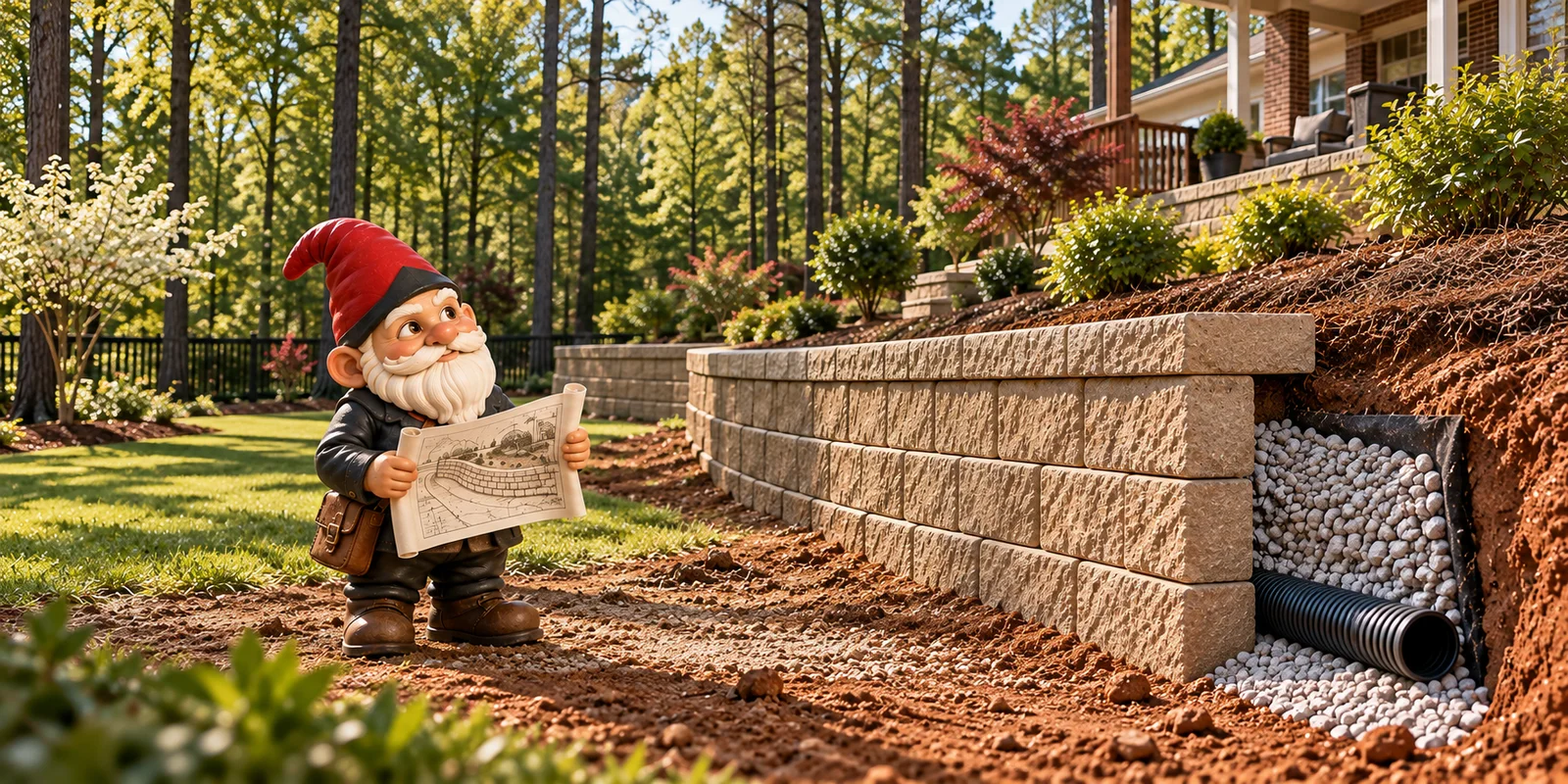
Water is what takes walls down
Most retaining walls that lean, bulge or crack fail because of water, not weight. Rain soaks the soil behind the wall, the soil gets heavy, and the pressure pushes the wall out. North Georgia clay holds water, which makes drainage even more important here.
A well-built wall gives that water a way out. Ask any contractor exactly how theirs will.
What good drainage looks like
- A layer of clean gravel directly behind the wall, not the clay that was dug out
- A perforated drain pipe at the base of the wall that carries water away to daylight or a drain
- Filter fabric between the gravel and the soil so the gravel does not clog
- Grading at the top so surface water runs away from the wall instead of over it
Height changes everything
Short garden walls are a common do-it-yourself project. Taller walls are a different job. Many building codes require a wall over about four feet tall, measured from the bottom of the footing, to be designed by an engineer, and walls that hold up a driveway, a slope or a building can need engineering at lower heights.
Before you get quotes, call Cherokee County or your city’s building department and ask what your wall needs: a permit, an engineered design, or an inspection.
Choosing the material
Interlocking concrete block is the most common choice for home walls. It stacks without mortar and, for taller walls, is tied back into the soil with layers of grid fabric called geogrid. Natural stone and boulder walls look softer but depend more on the skill of the crew. Poured concrete is strong and usually the most expensive.
Questions to ask a wall contractor
- How will water drain from behind this wall, and where does it go?
- Does this wall need a permit or an engineer, and who handles that?
- What base and backfill will you use?
- Will you use geogrid, and how far back does it go?
- What does your warranty cover if the wall moves?
This guide is general information for homeowners, not legal or insurance advice. Betterhere does not recommend or guarantee any business.